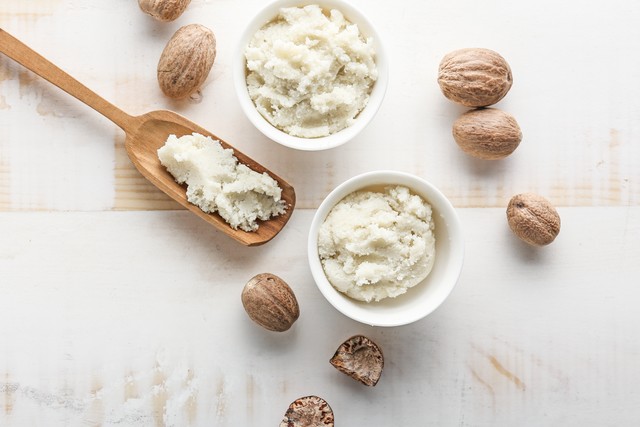
SHEA BUTTER UNREFINED FILTERED
SHEA BUTTER UNREFINED FILTERED
Shea Butter is a fat that’s been extracted from nuts of African shea tree(Vitellaria paradoxa). It’s off-white or ivory-coloured and has a creamy consistency that’s easy to spread on your skin. Most shea butter comes from shea trees in West Africa. Traditionally, shea butter was used for medicinal and cooking purposes in Africa. Despite the use of the word "butter" in its name, it is vegan and contains no dairy products.
High concentrations of fatty acids and vitamins make shea butter an ideal cosmetic ingredient for softening skin. Shea butter also has anti-inflammatory and healing properties. Using shea butter on your body, especially your face, can condition, tone, and soothe your skin.
Shea butter is emollient. As an emollient, shea butter helps trap moisture in the skin. Shea butter also contains linoleic acid and products containing linoleic acid had anti-inflammatory effects on the skin and hydration boosting properties.
Shea butter contains bioactive ingredients that give it anti-inflammatory properties and help alleviate the signs and symptoms of eczema.
Shea butter may have an ability to soften scar tissue. However people who experience acne-prone skin may want to avoid using shea butter, or products containing shea butter, on the face.
Unrefined shea butter means that it has been extracted and prepared without using any chemicals or preservatives.
Refined shea butter has undergone a process to remove the natural scent and make it whiter in color.
Shea Butter Face Mask
Ingredients:
2 tablespoon of aloe vera gel
2 tablespoon of raw shea butter
2 tablespoon of extra virgin olive oil
- Take the aloe vera gel, shea butter, and extra virgin olive oil and place in a clean cup.Combine the ingredients thoroughly.
2. Clean the face before applying the mask.
3. Apply the mixture on the face and neck.
4. Leave for approximately 15 minutes, or until the mask is dry.
5. Rinse the face with warm water.
INCI Name: Butyrospermum Parkii (Shea) Butter.
Colour: Creamish to off white Ivory
Type: Unrefined, Solid to Semi Solid (Edible Grade)
Plant Part Used: Nuts
Certificate: COSMOS & ECOCERT
Country of Origin: Ghana (West Africa)


